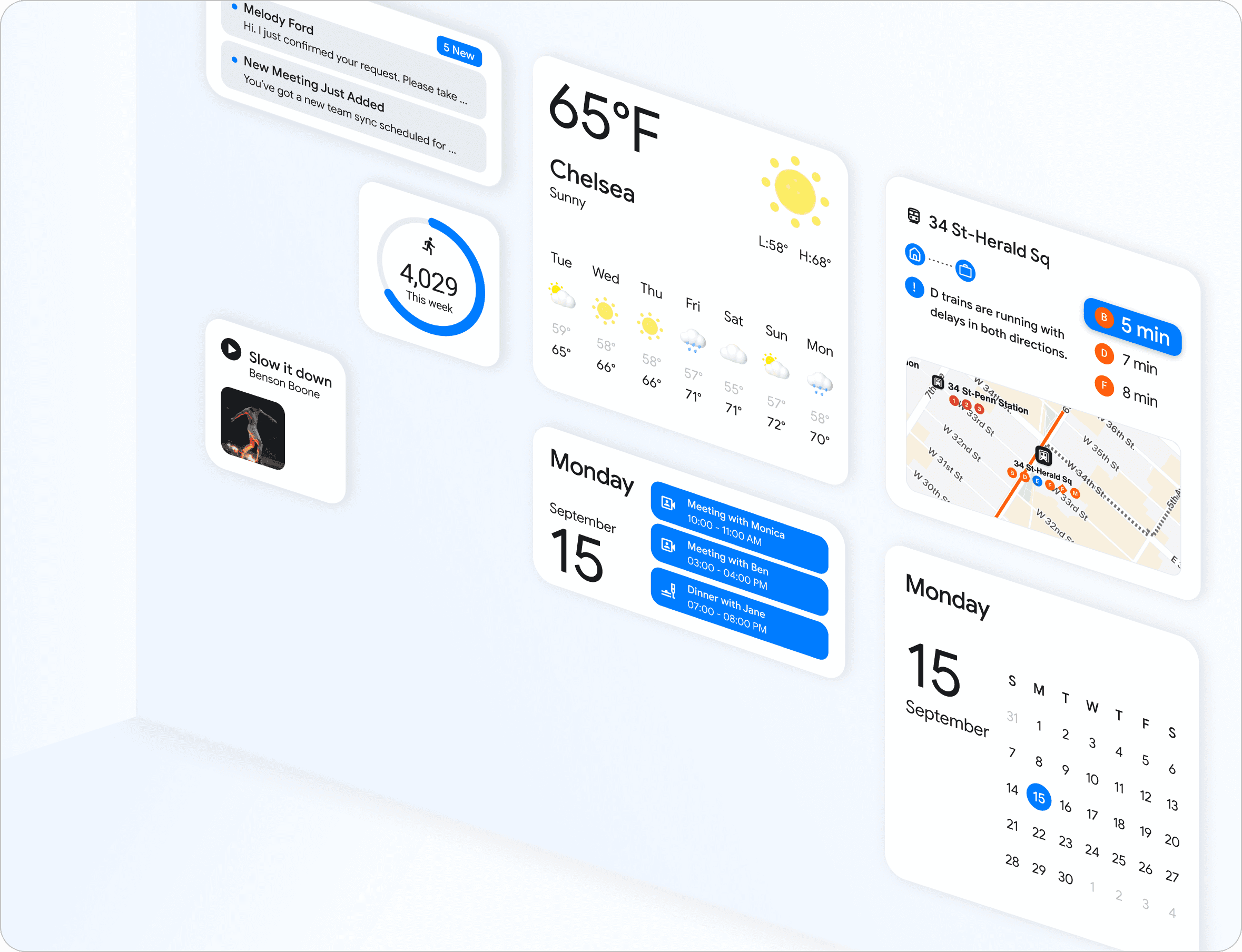
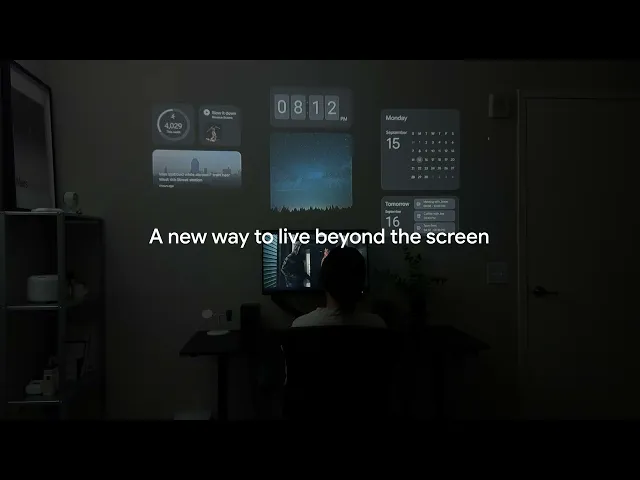
How might everyday information live in
our space instead of on our phones?
The Problem
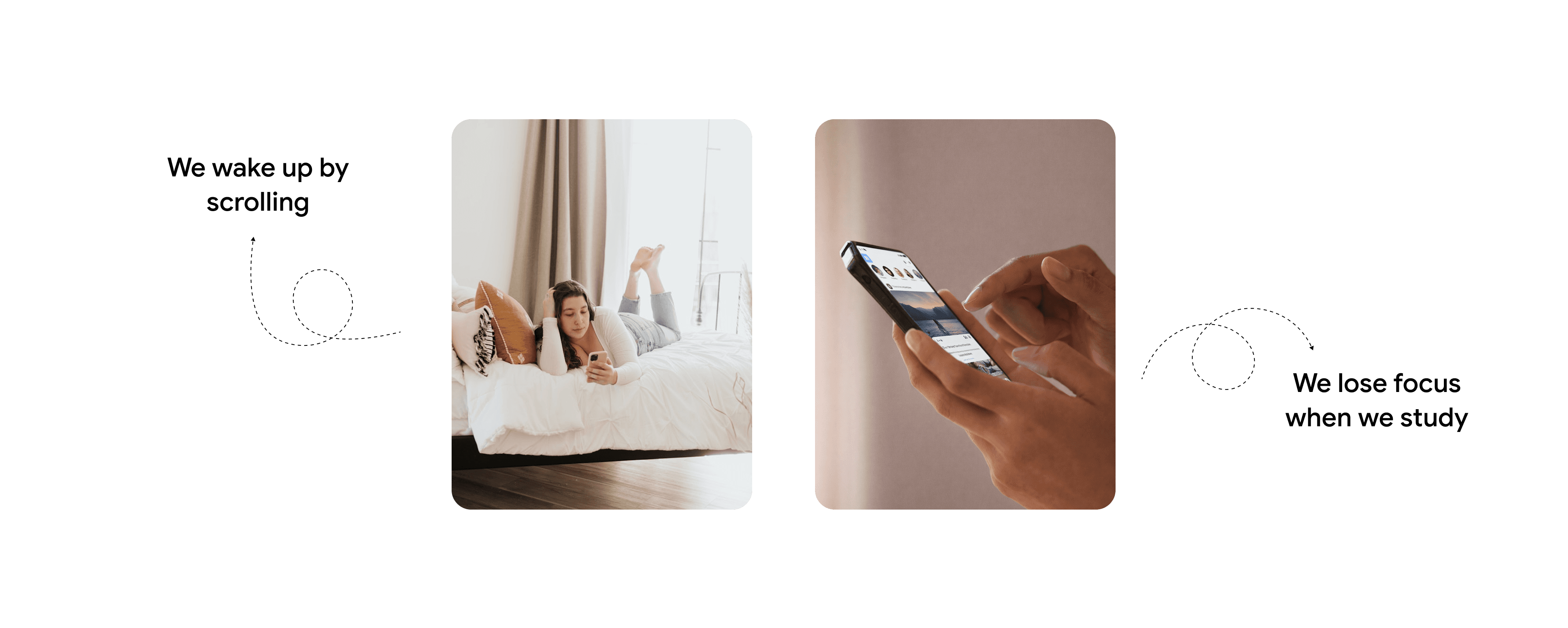
We check our phones dozens of times a day for simple information.
Whether it’s the time, weather, schedules, or notifications, these small interactions happen repeatedly and interrupt focus. While convenient, this behavior creates constant context switching and contributes to digital fatigue.
insight
The problem isn’t the information itself, but how we access it.
While screens concentrate information into a single device, our physical environment already contains unused surfaces that can support lightweight interactions. By shifting information from devices into space, access can become more natural, ambient, and less interruptive.

Opportunity
Solution Overview
This led to the idea of a spatial interface that embeds information directly into the surrounding environment.
Design principles
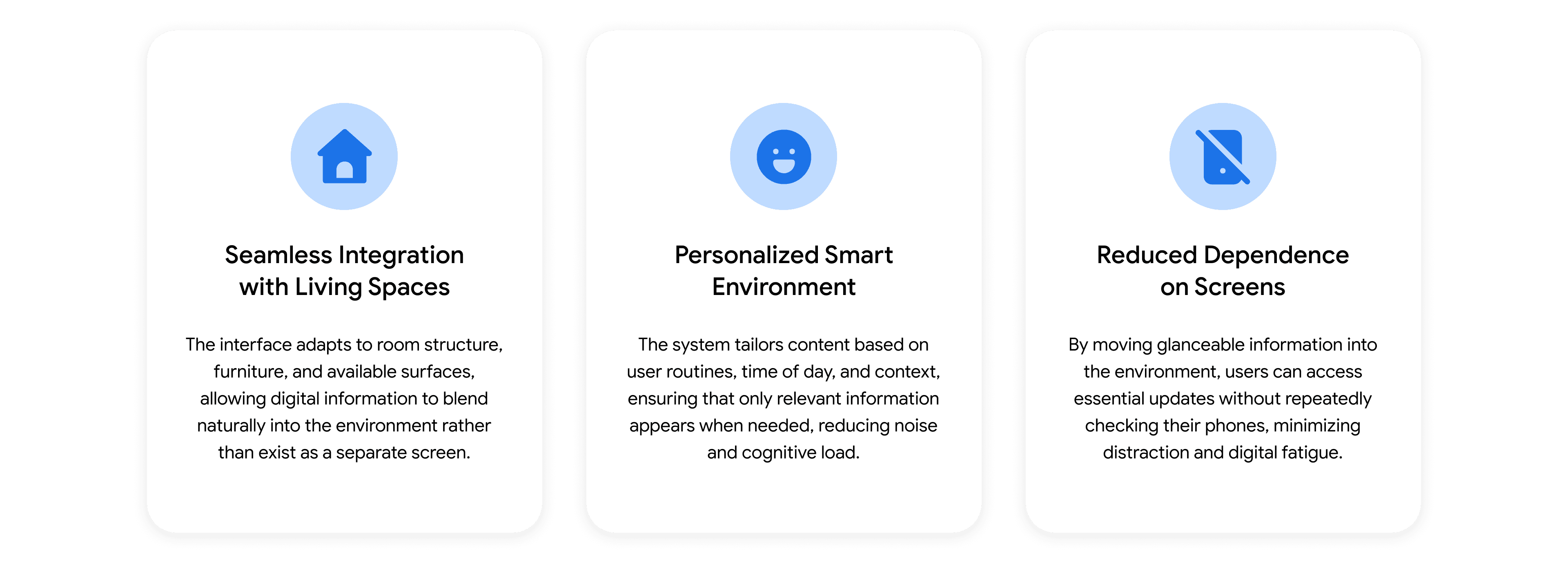
Rather than starting with features, I defined core principles to guide how information should be accessed and experienced.
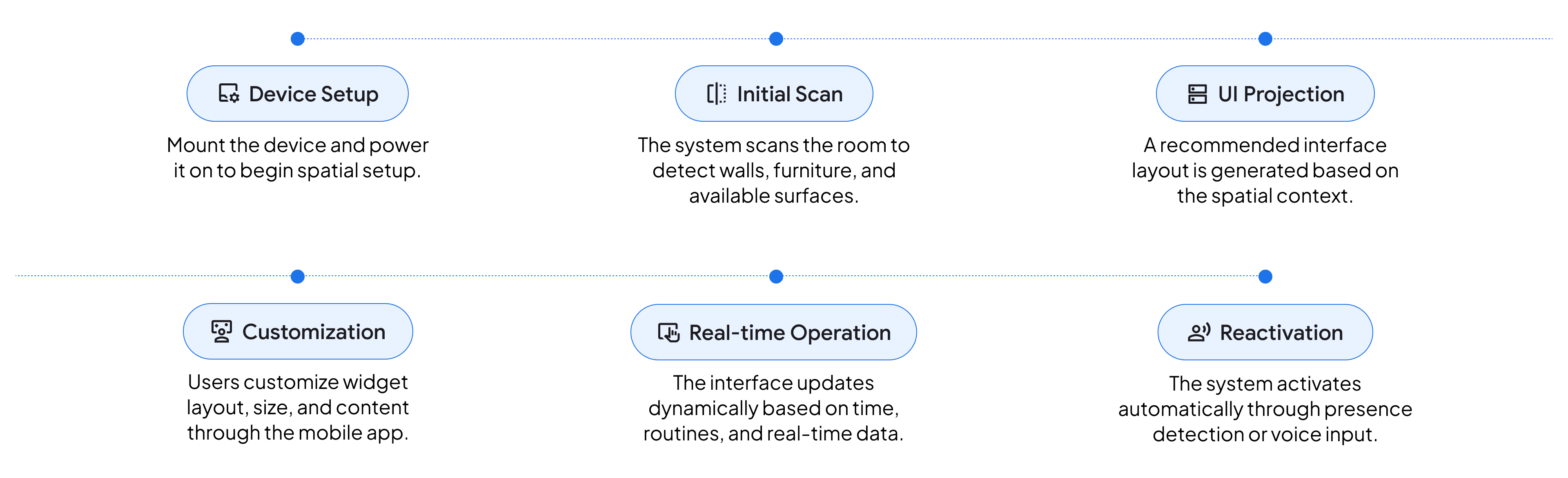
How it works
From setup to real-time interaction, Nest Beam continuously adapts to the user’s space and context.
Design Decisions
Designing beyond the screen.
One of the most important decisions was to not frame Nest Beam as another display.
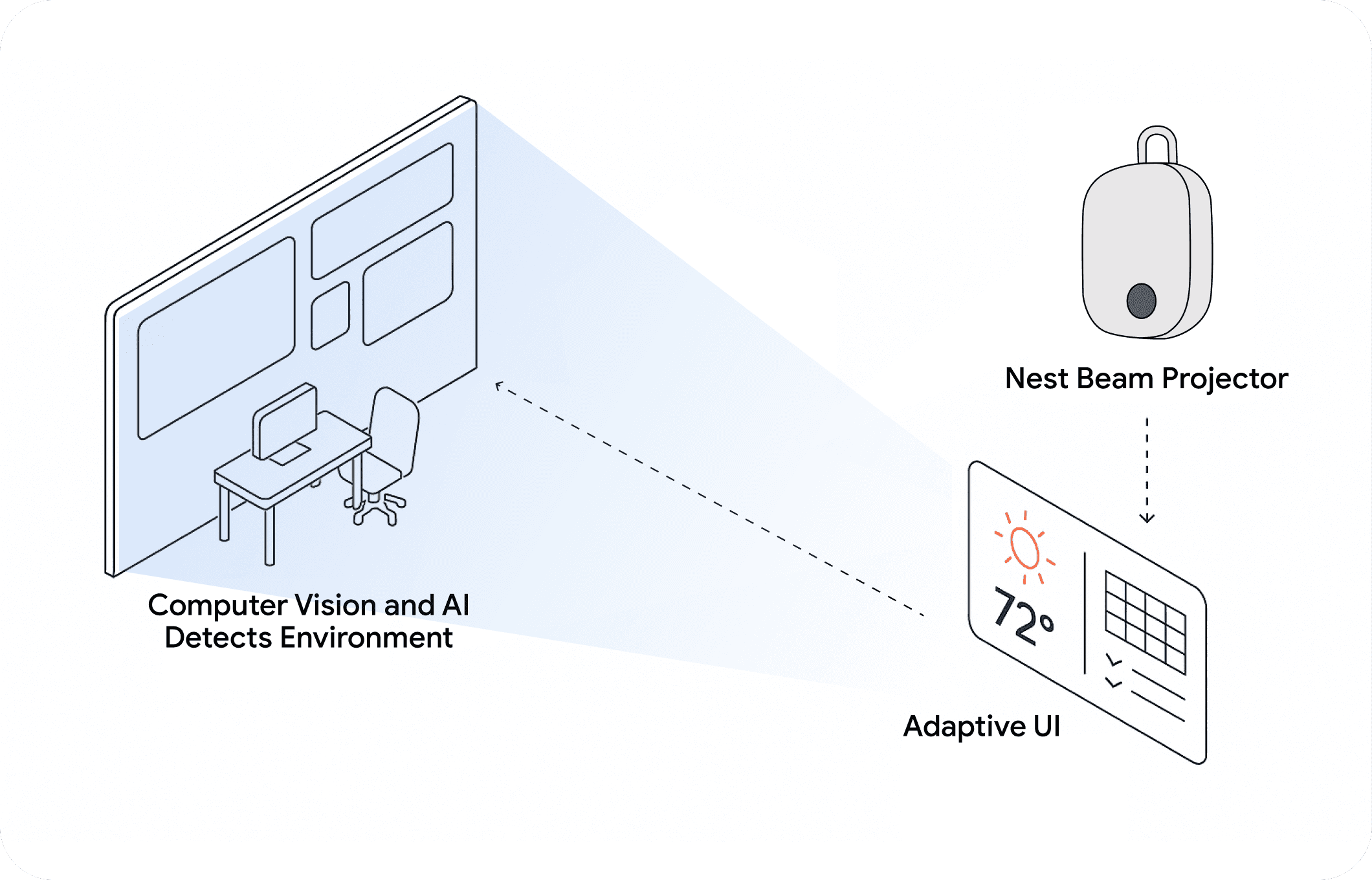
The project began with the problem of repeated phone checking, so solving it with another screen would have added more visual competition instead of reducing it. I wanted information to live more quietly in the environment, which led to projection as the main interaction model.
Design Decisions
Designing a system, not a static UI.
Another key decision was to treat the interface as a responsive system rather than a fixed layout.
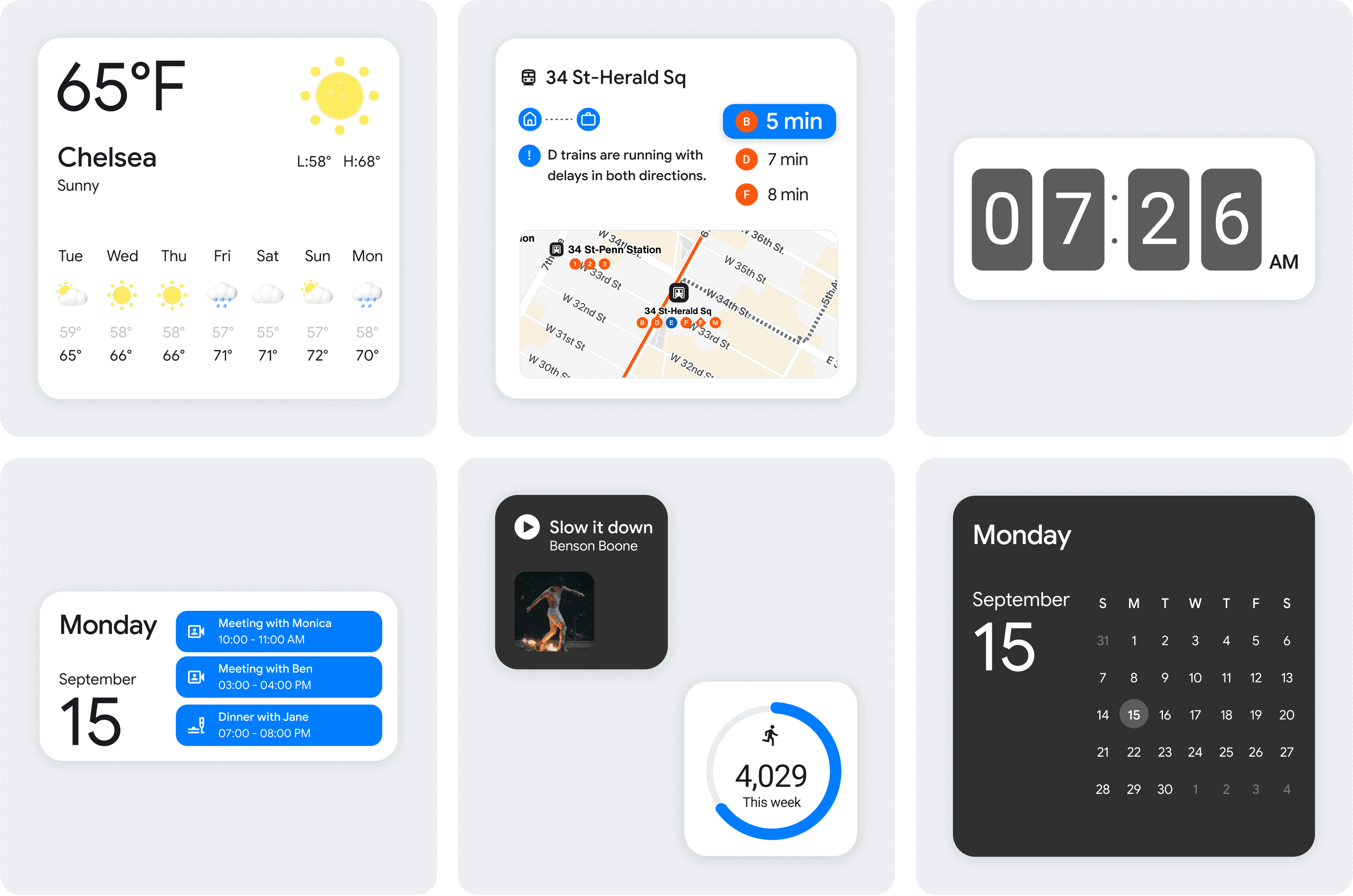
Since the product had to work across different room conditions, the design needed to adapt to walls, furniture, and open surfaces. This turned the focus from designing a single screen to defining how information should be placed, scaled, and behave in space.
Final Design
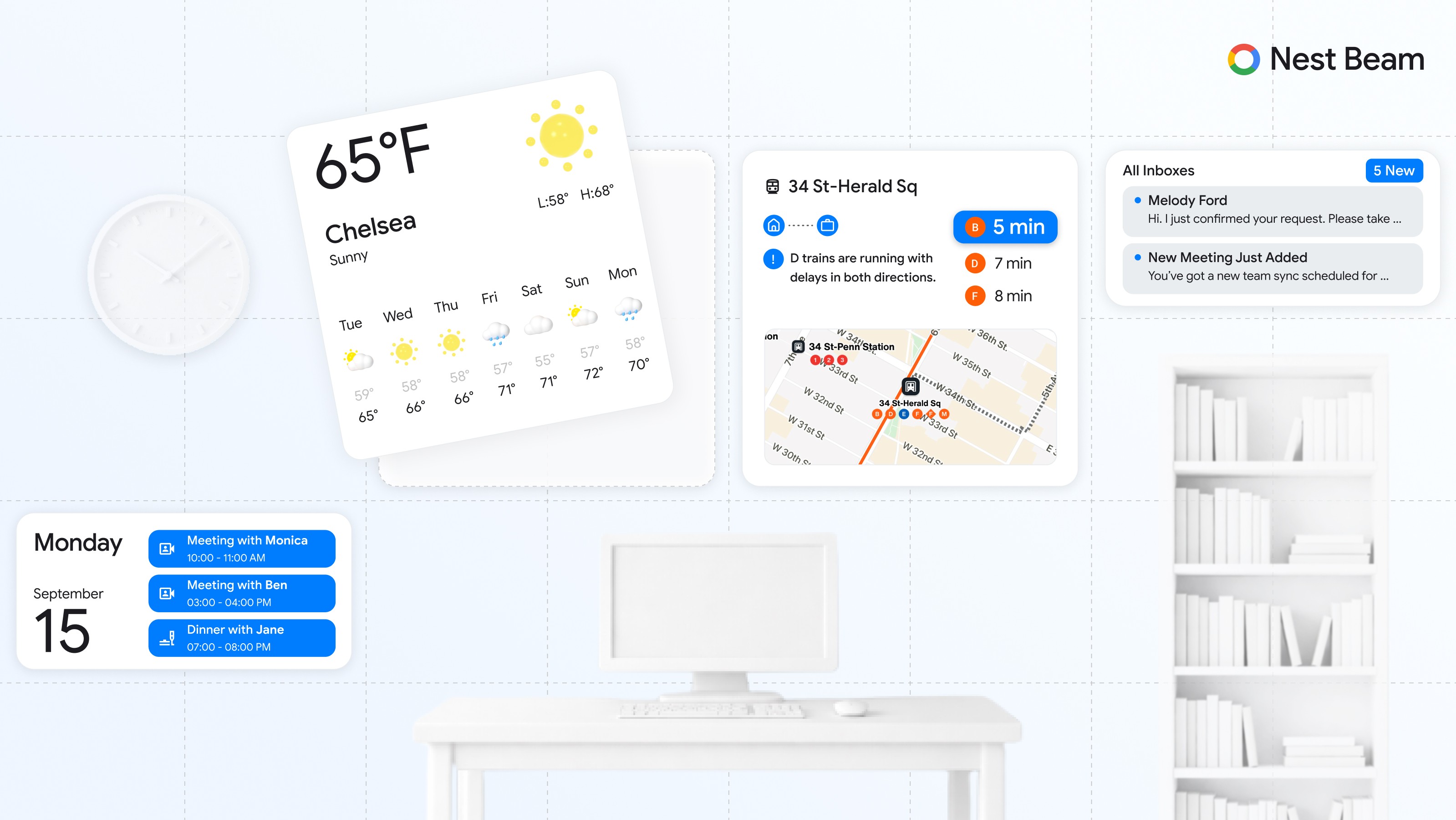
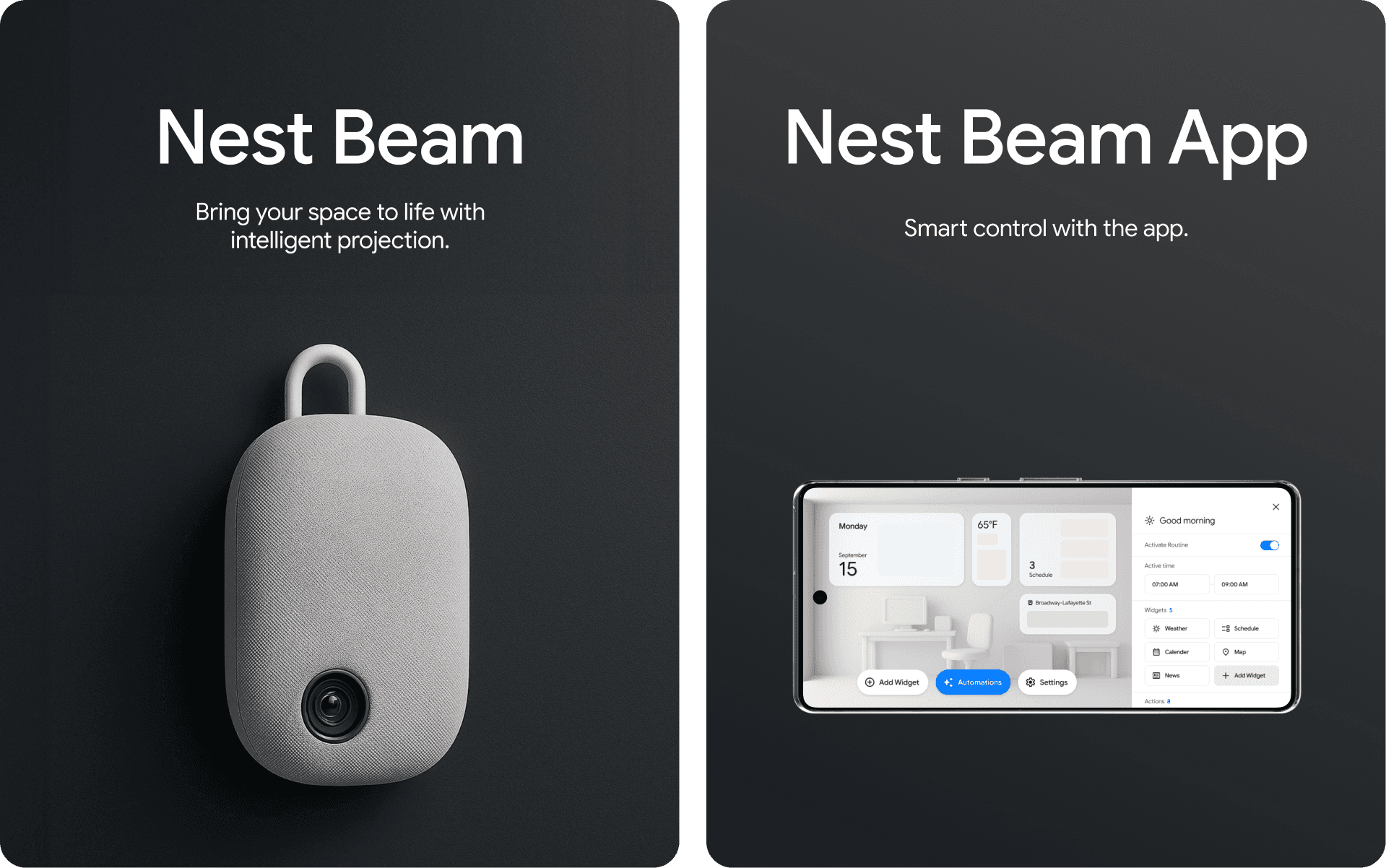
The final design turns Nest Beam into a flexible information layer embedded within the environment.
Users control the experience through a mobile app, while the projected UI adapts to spatial context and daily routines.
This creates a system that feels personalized, unobtrusive, and easy to glance at throughout the day.
Final Design
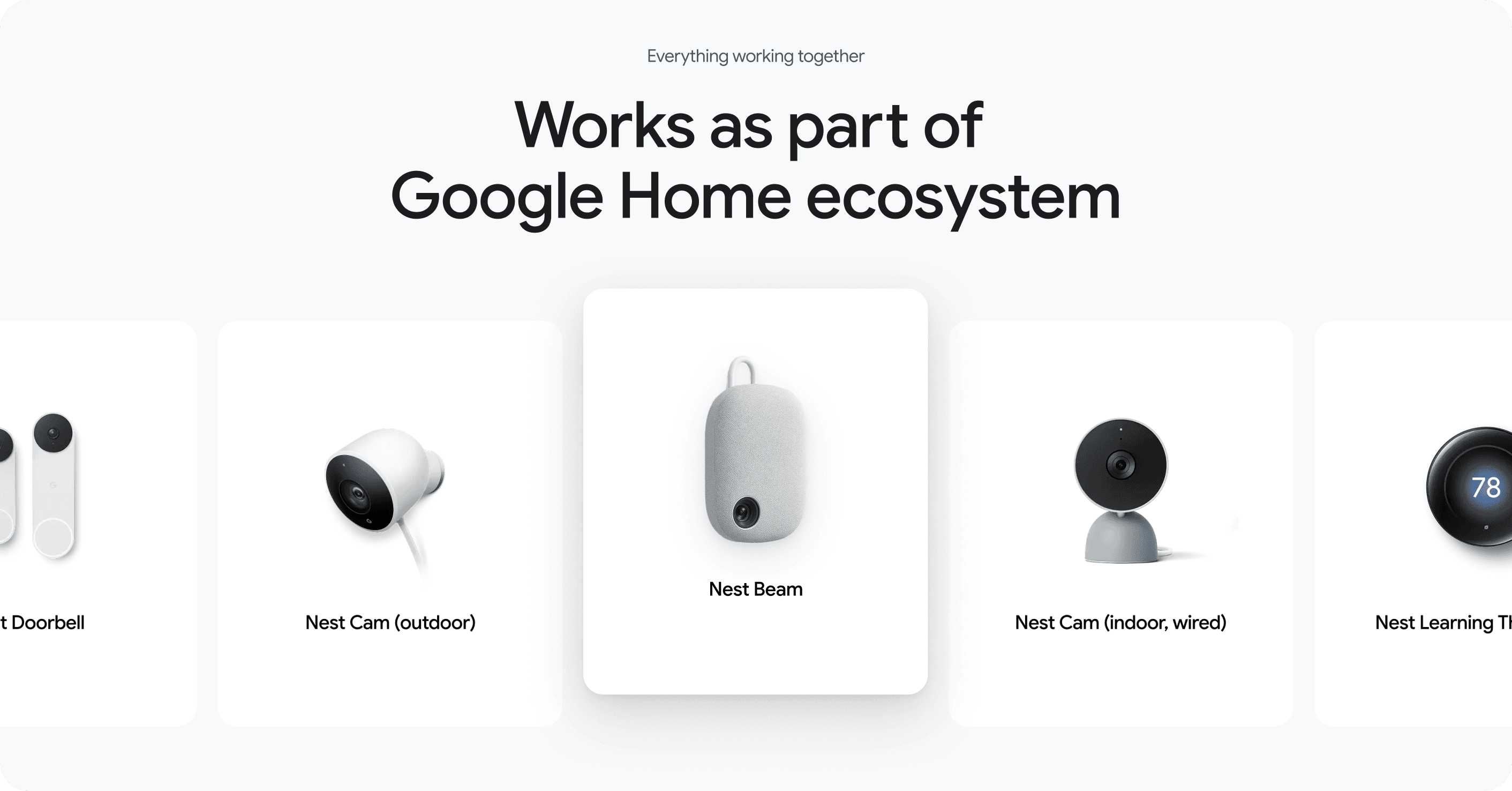
Nest Beam extends the Google Home ecosystem beyond screens and speakers, turning the environment itself into part of the smart home experience.
Final Design
Spatial Projection in Context.
Projected content uses available surfaces and negative space to remain readable while feeling visually integrated with the environment.
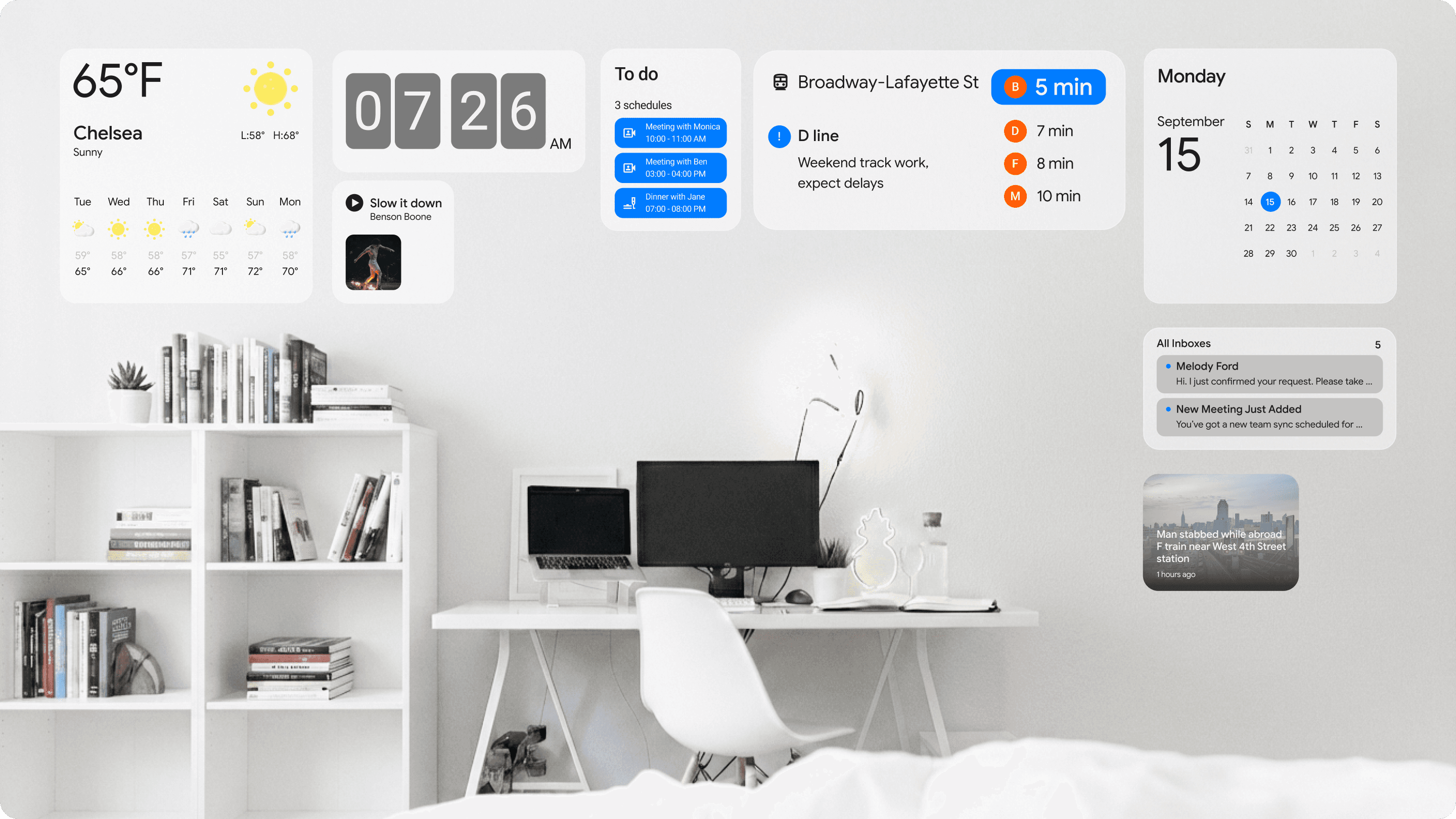
Instead of relying on a fixed screen composition, the interface shifts placement and scale according to spatial context, making the system more natural and less intrusive.
Final Design
The mobile app supports initial setup and optional manual customization.
Although Nest Beam can automatically surface relevant widgets through AI and allows voice-based adjustments, the app gives users a way to fine-tune layouts and routines when needed. I designed the app in a horizontal format to better match the spatial projection experience, rather than following a conventional vertical mobile UI.
Users can add widgets based on the information they want most visible in their space.
Widgets can be resized to adjust visual hierarchy and make important information more prominent.
Users can set widgets to appear differently based on time of day and personal routines.