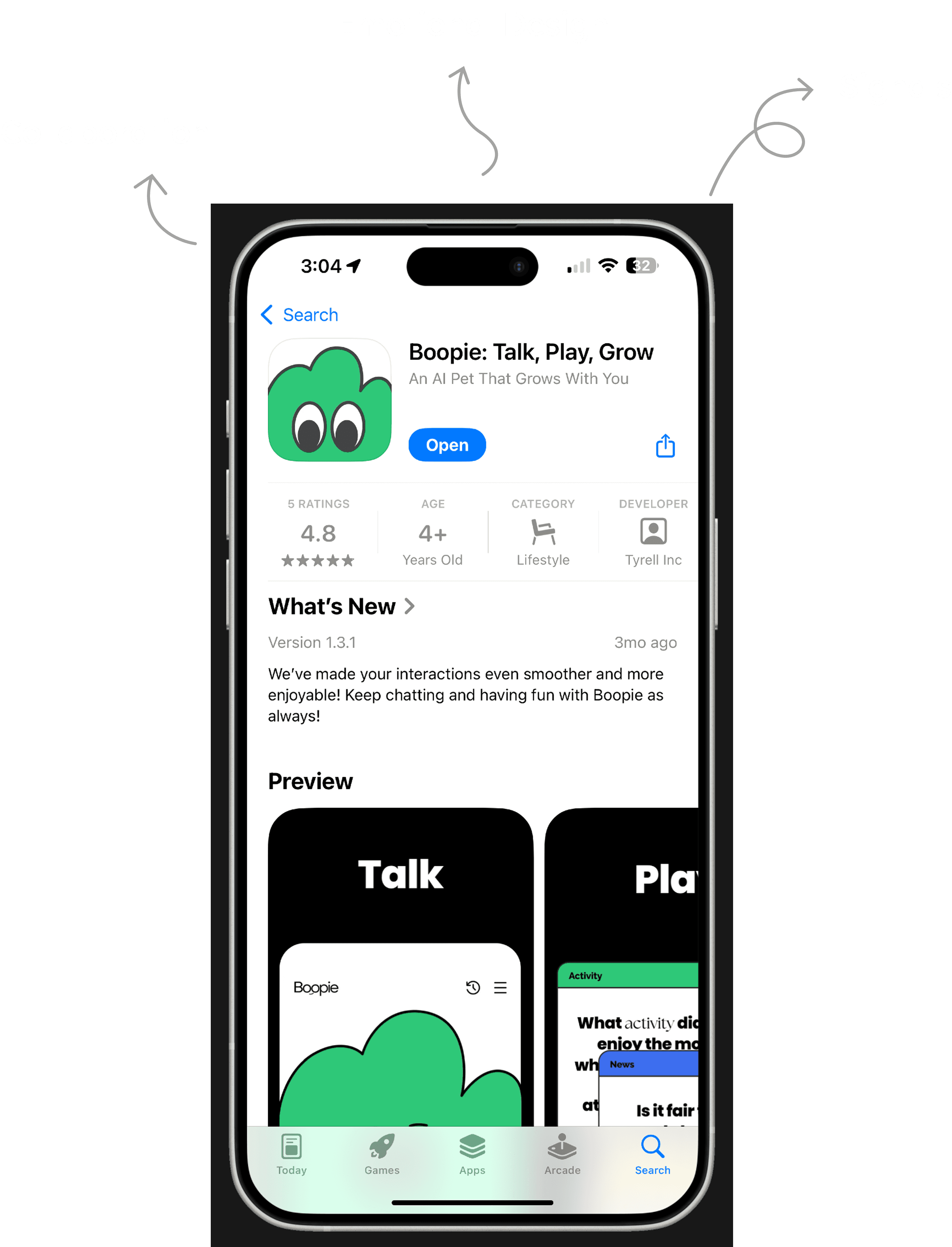
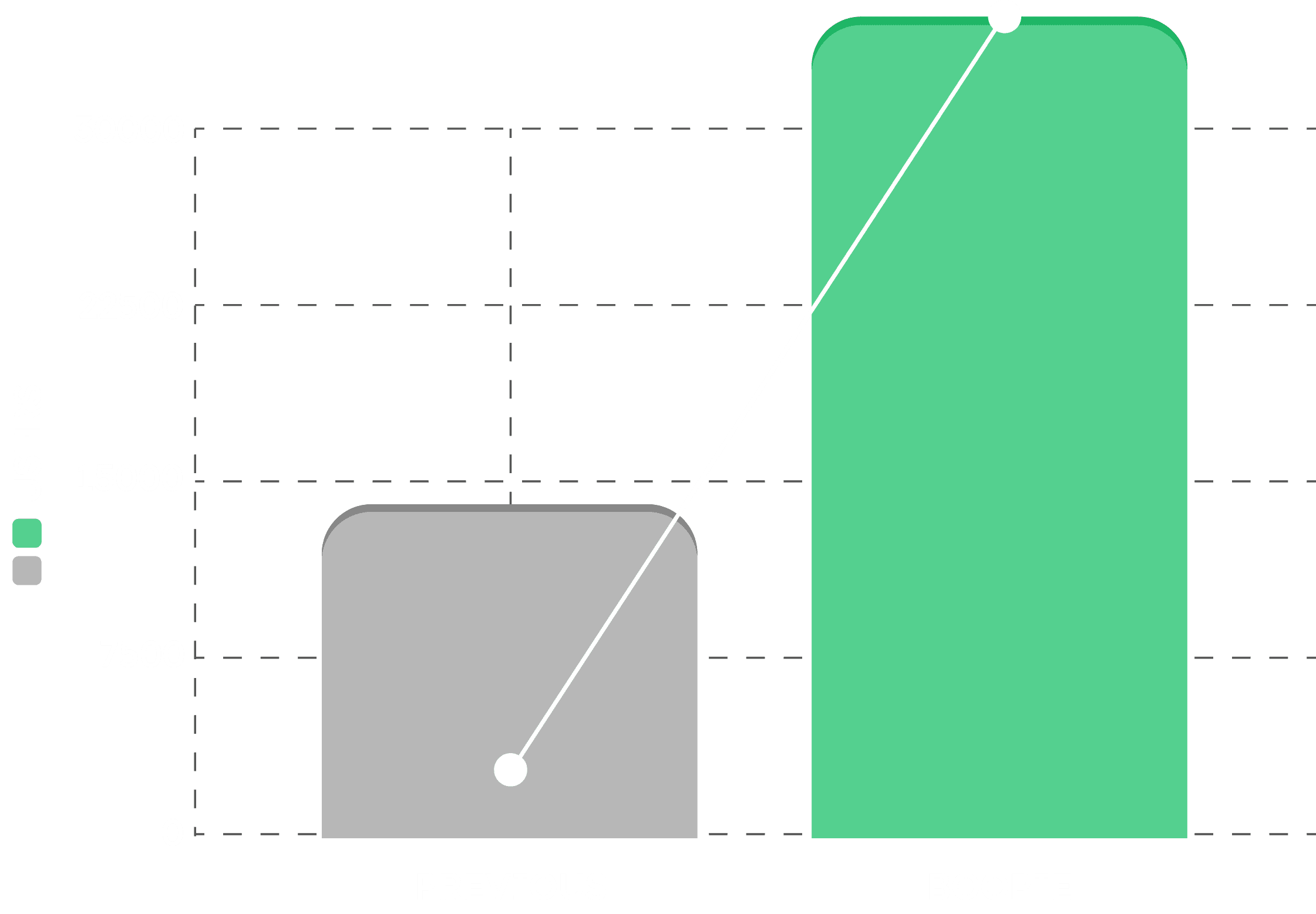
Average session depth
Return rate
Funding stage










The Problem
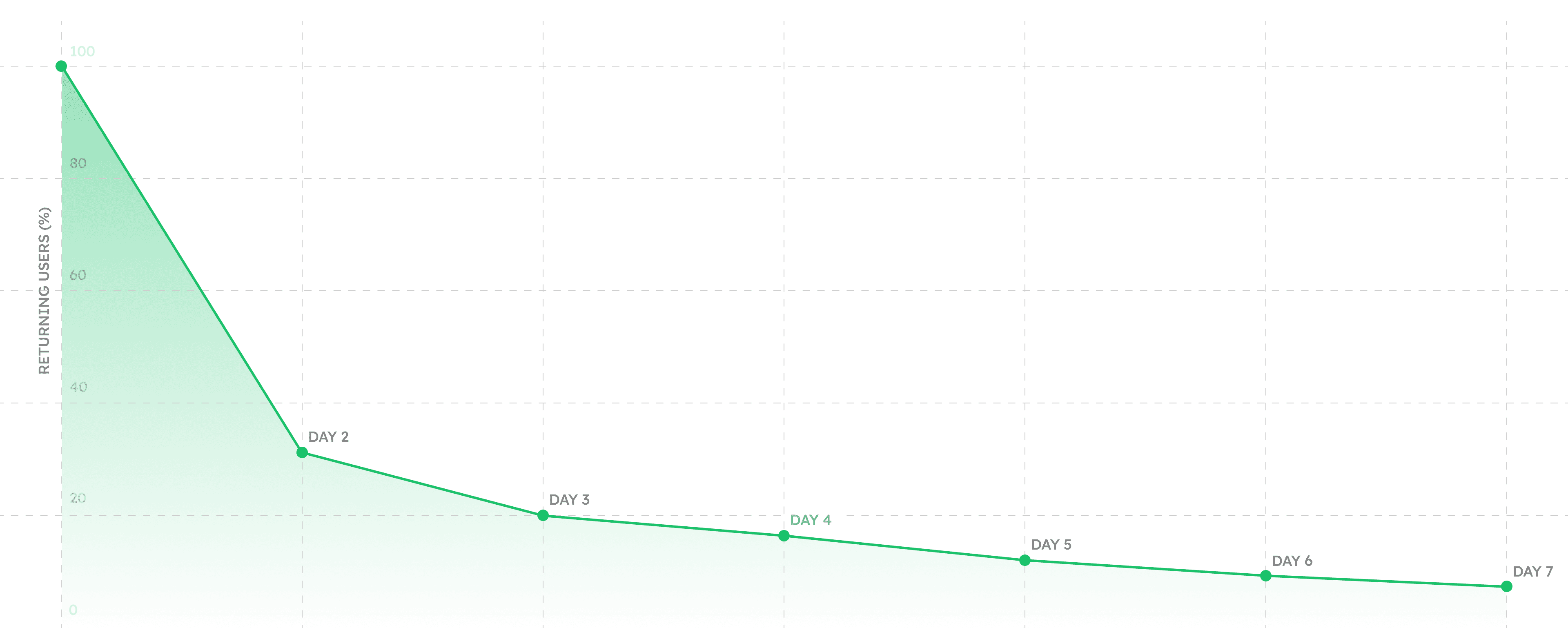
Boopie struggled to retain users beyond Day 1.
Research approach
I led user research together with the CEO, focusing on qualitative insights.

Research Insight
What we learned from users:



Problem statement
How might we help emotionally distressed users share more naturally and feel understood, to increase long-term engagement and retention?
Design Process 1
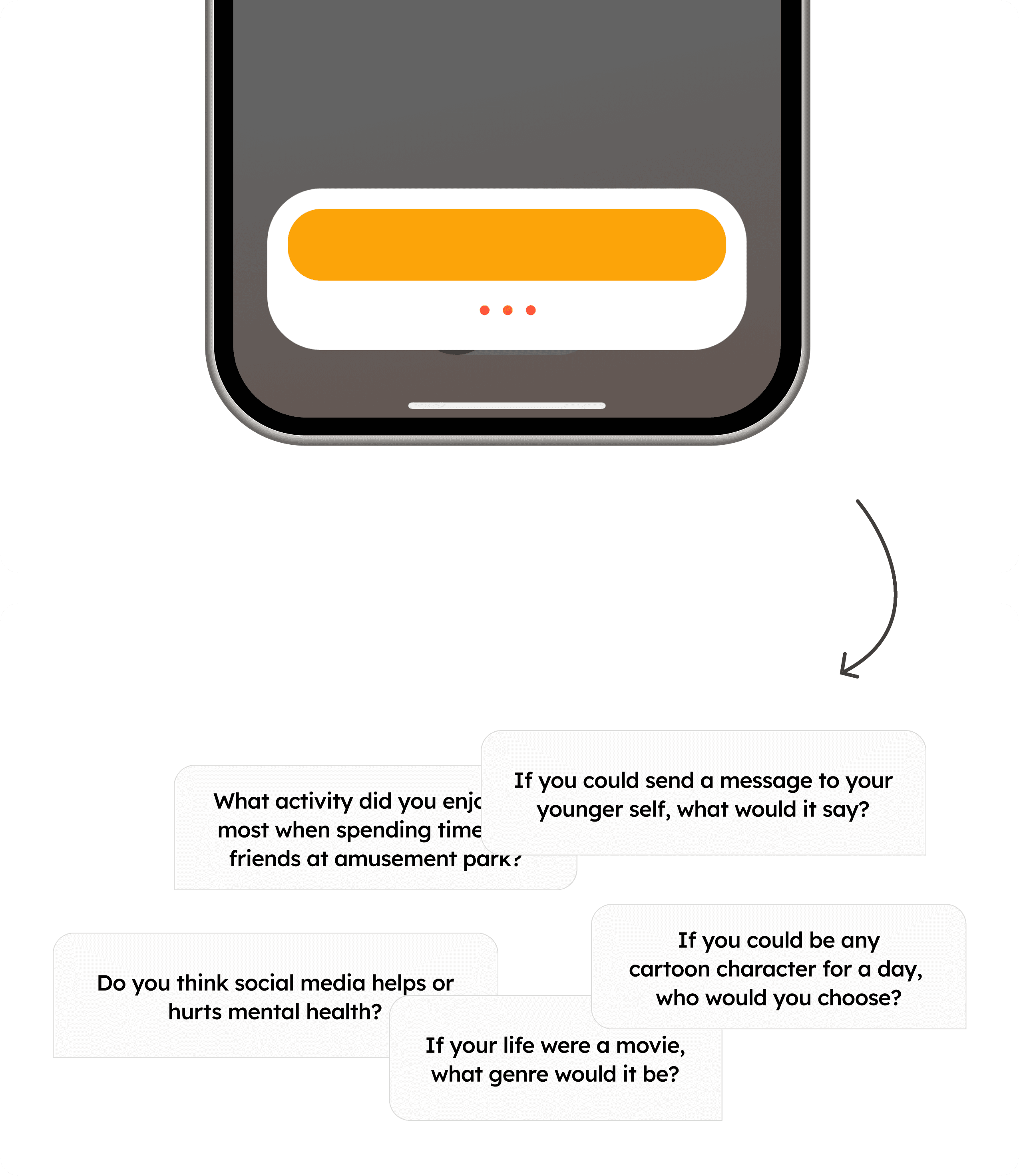
Prompt
Lowering the barrier to start.
Boopie’s previous version, Clapy, had a blank interface, users had to know what they wanted to talk about,
which created a high barrier to entry.

Design Directions
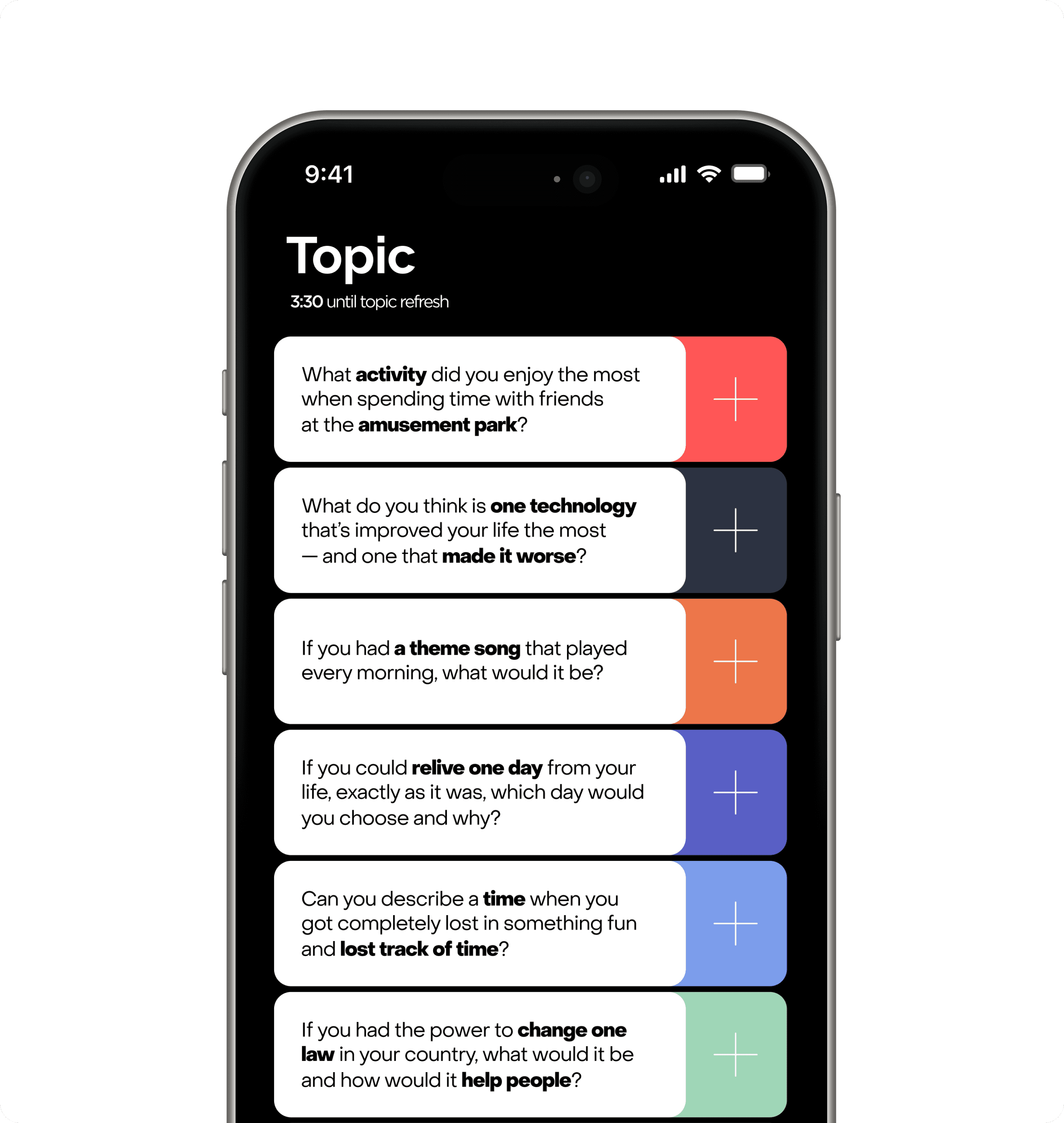
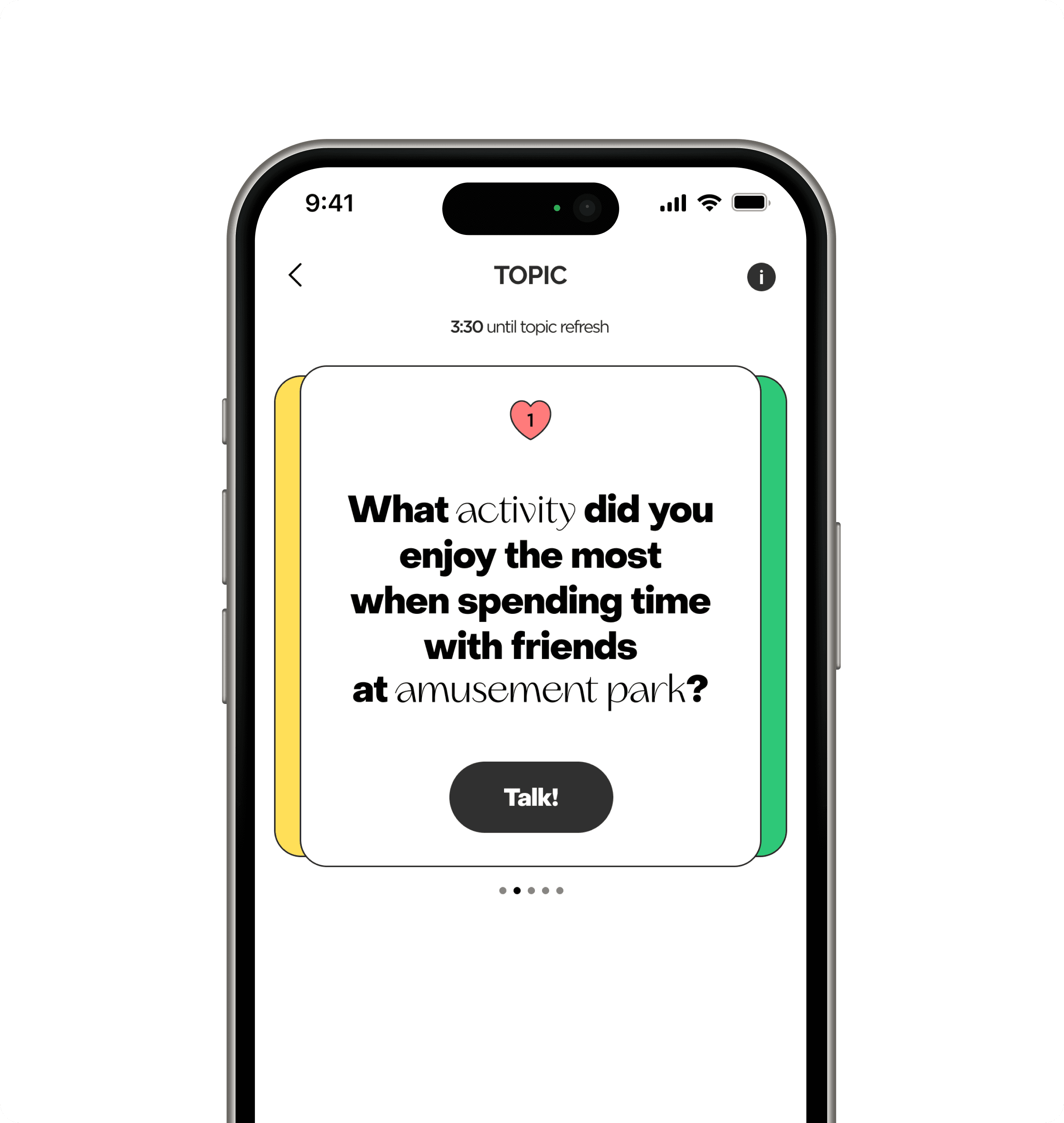
I developed two directions and assessed them using our design principles.
Lower the barrier to start with
approachable prompts.
Foster emotional engagement to motivate
users to explore more topics.
Lower the barrier to start with
approachable prompts.
Foster emotional engagement to motivate
users to explore more topics.

Iteration
Okay, we picked Option B. Now what?
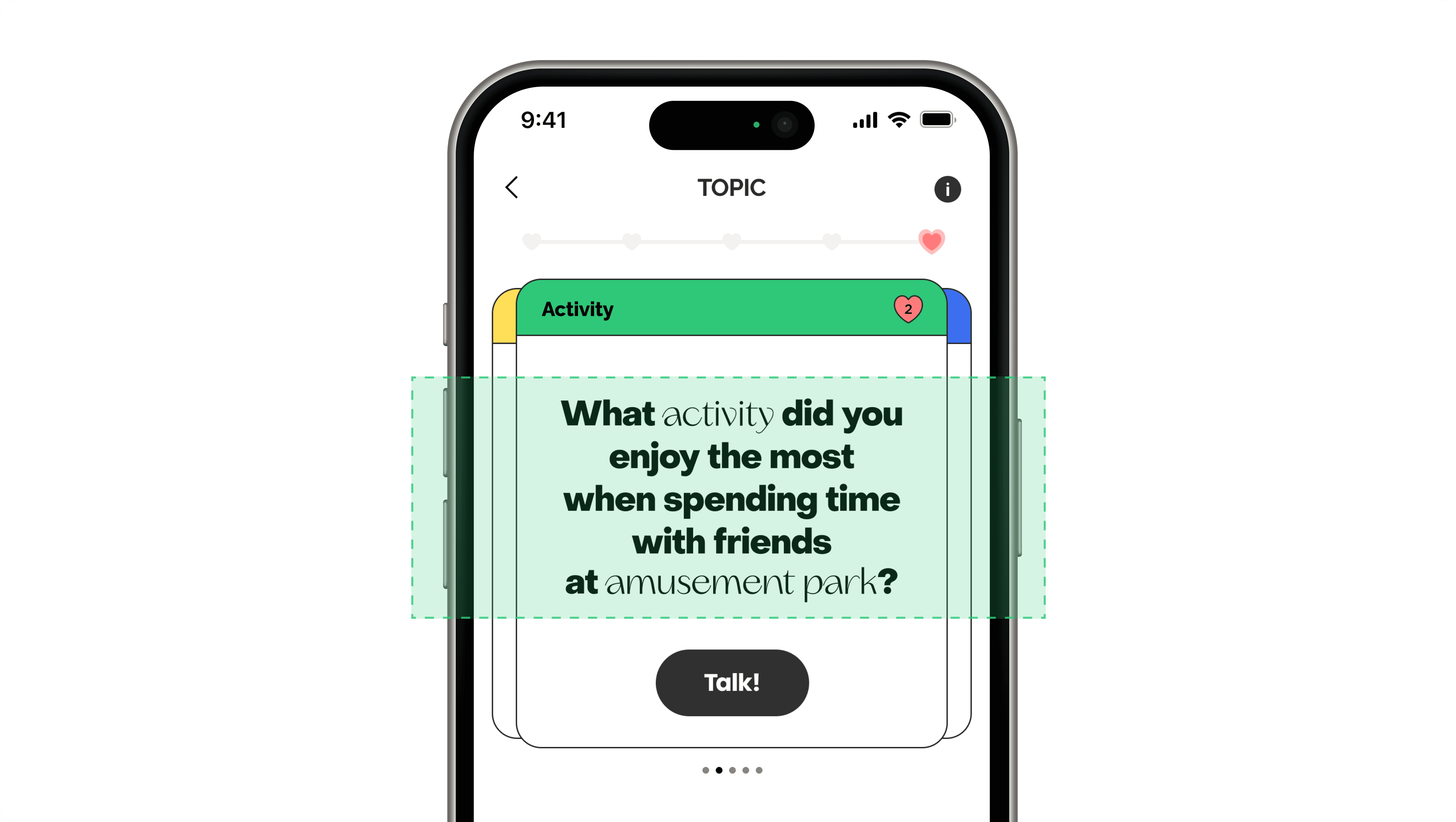
I recommended Option B, as it encouraged focus despite showing only a few cards per day, and the team aligned.
But selecting the format was just the start. The real challenge was making the cards engaging long-term and scalable for growth.
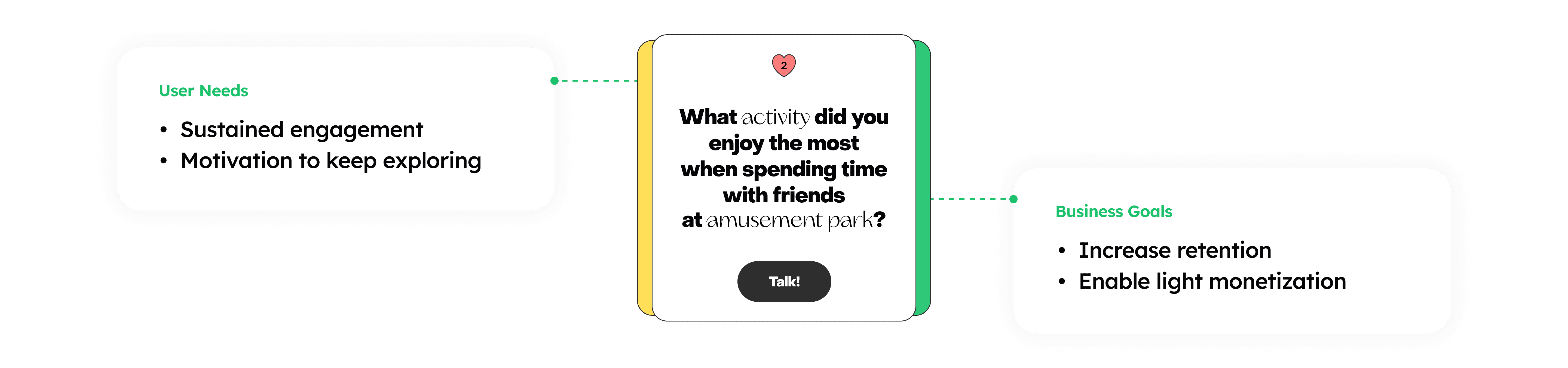
Added Category Tags
We introduced themed categories to diversify daily topics.
This also enabled light monetization by letting users unlock preferred categories.
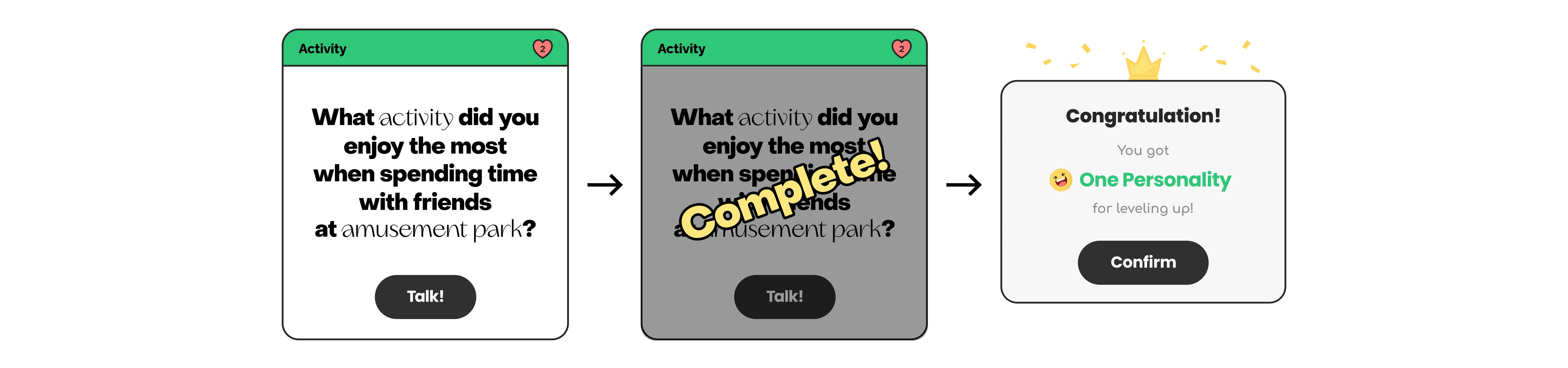
Daily Quest & XP System
We integrated an XP system to encourage exploration.
Less-picked topics rewarded more points, and completing five cards unlocked bonus XP.
Typographic Emphasis
Because the prompts were full sentences, I highlighted key words
to reduce cognitive load and make each card feel intentional.
|
Design Process 2
Response
Making the AI feel alive.
Design Directions
Based on research,
I proposed three character-first design concepts.
Simple
Flat
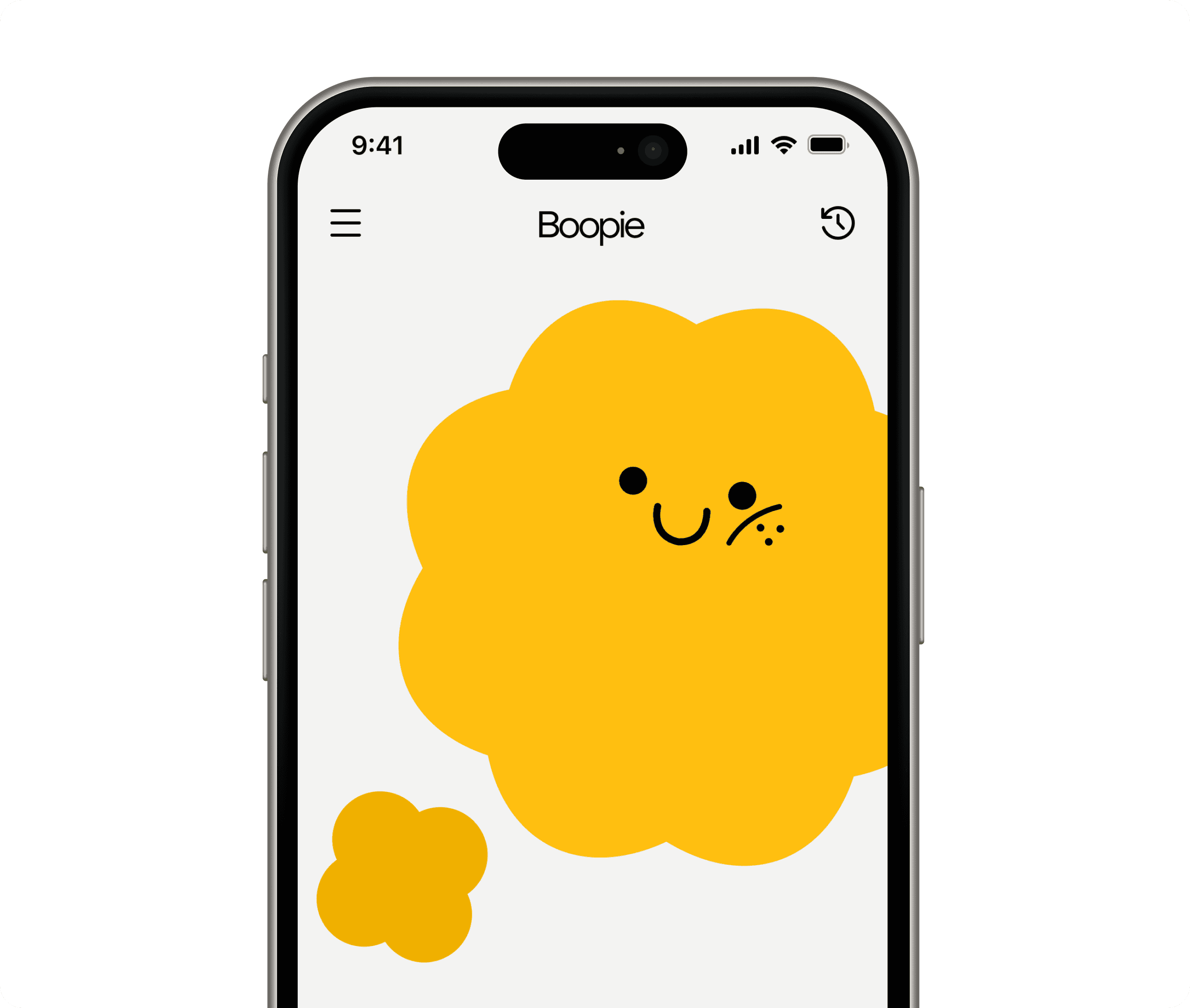
Playful, friendly, and scalable, but needed
multiple variations and full-body animations.
Playful
Full animation
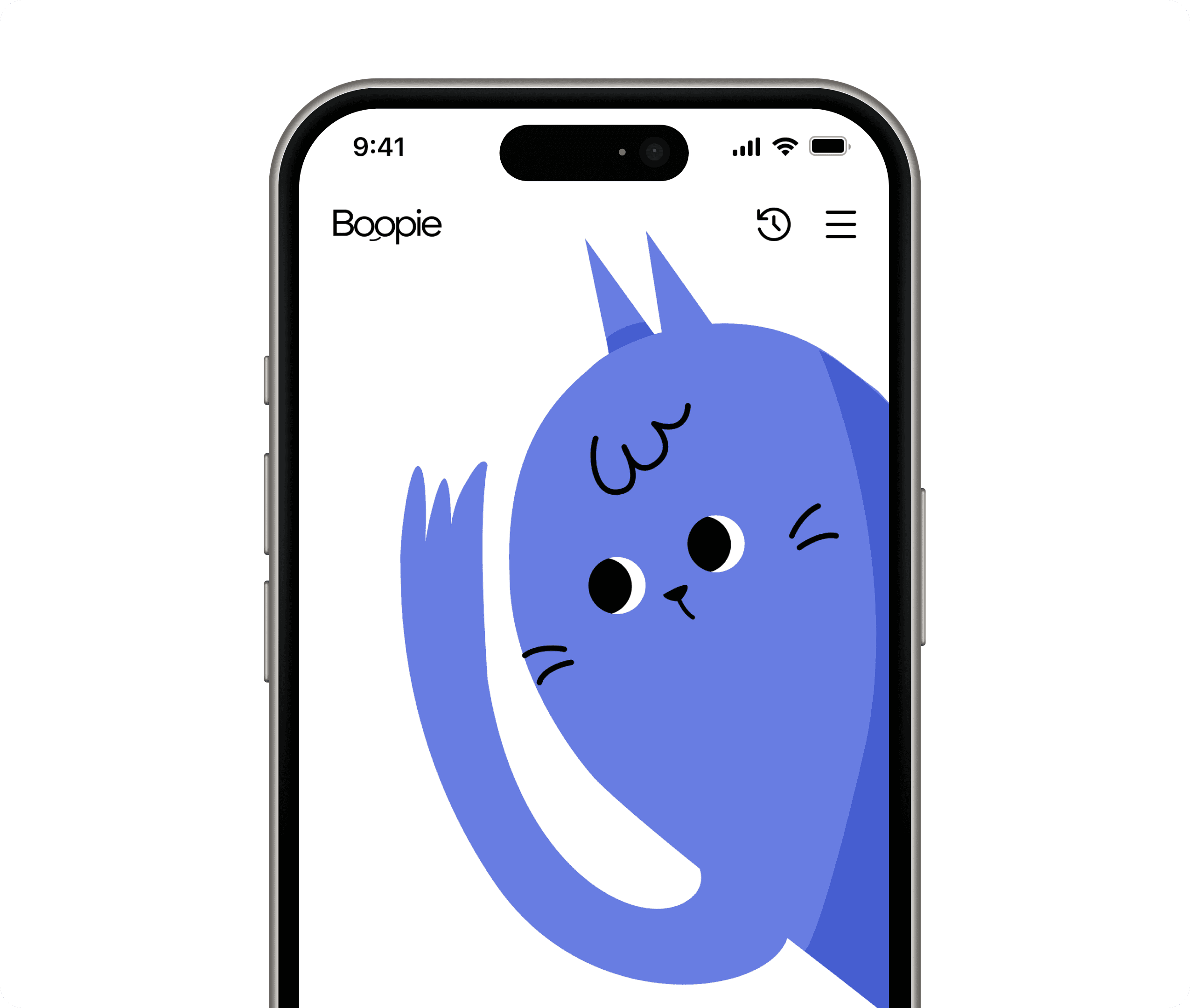
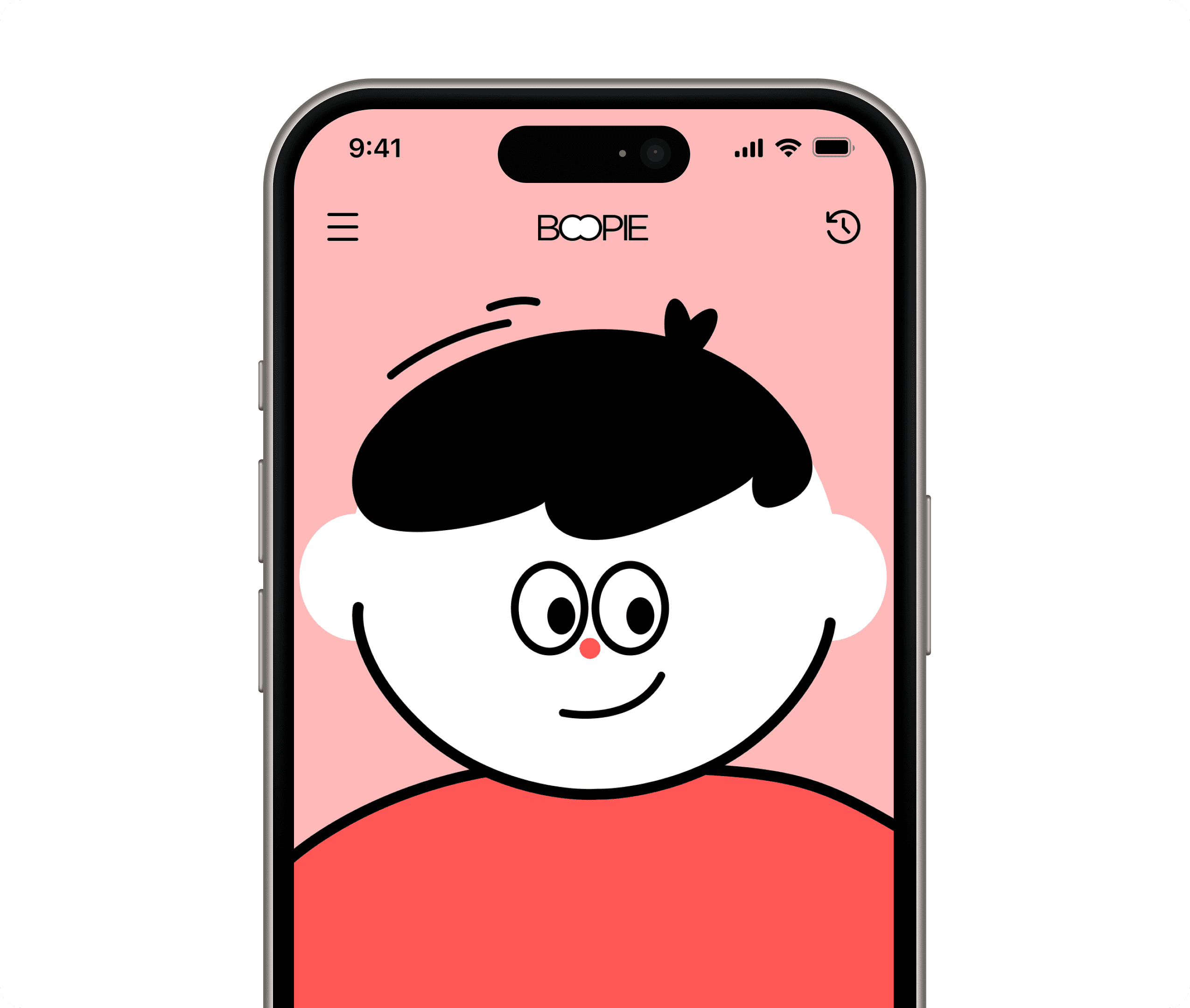
A cute, bust-up character that’s expressive and relatable, but typically resource-heavy to produce and maintain.
Expressive
Resource-heavy

Iteration
Minimal abstract character
with expressive face & simple customization
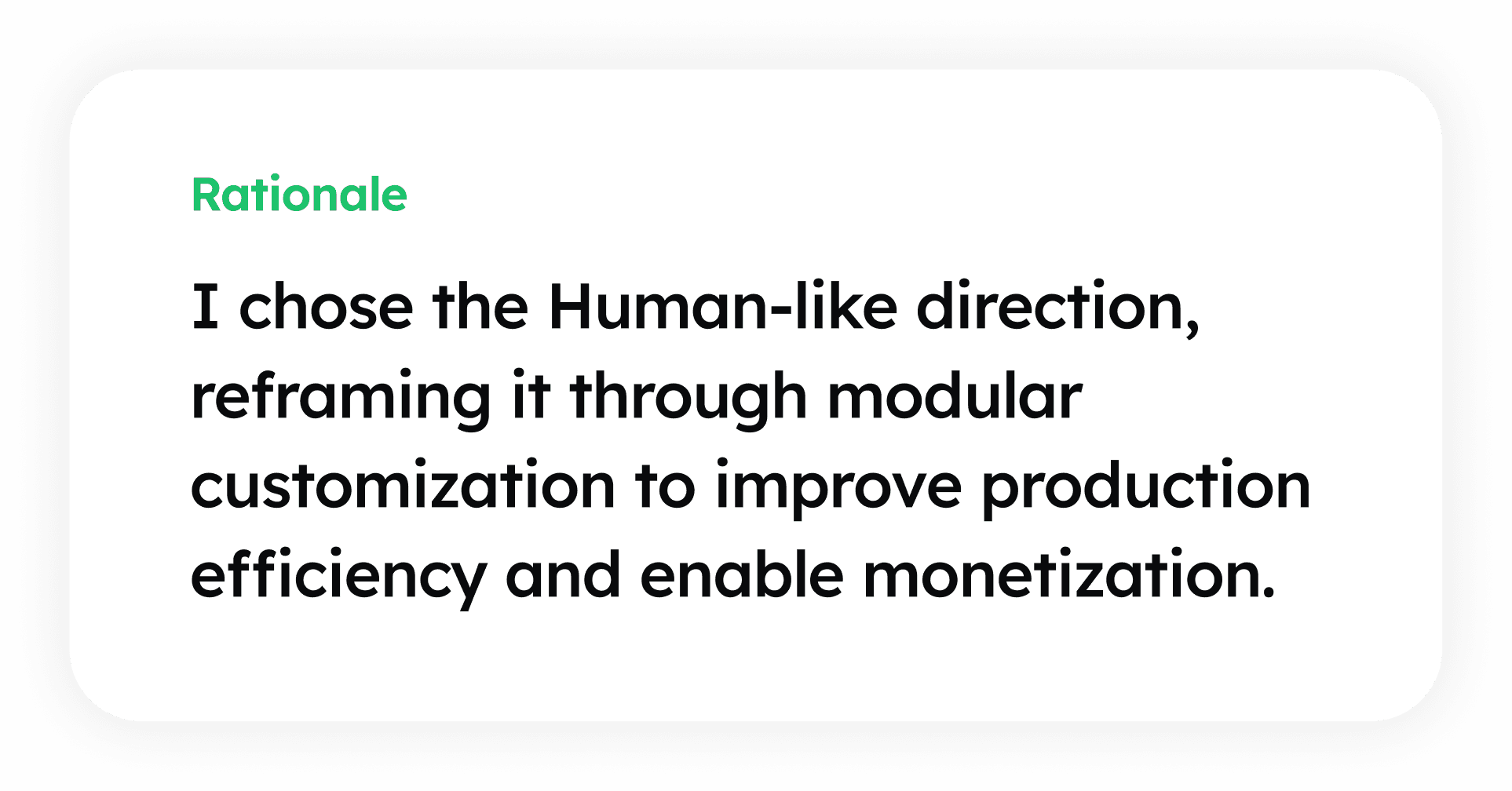
Through rapid iterations with the team, I combined the strengths of the Human-like and Abstract directions.
Boopie became a minimal abstract character with expressive human touches and focused customization.
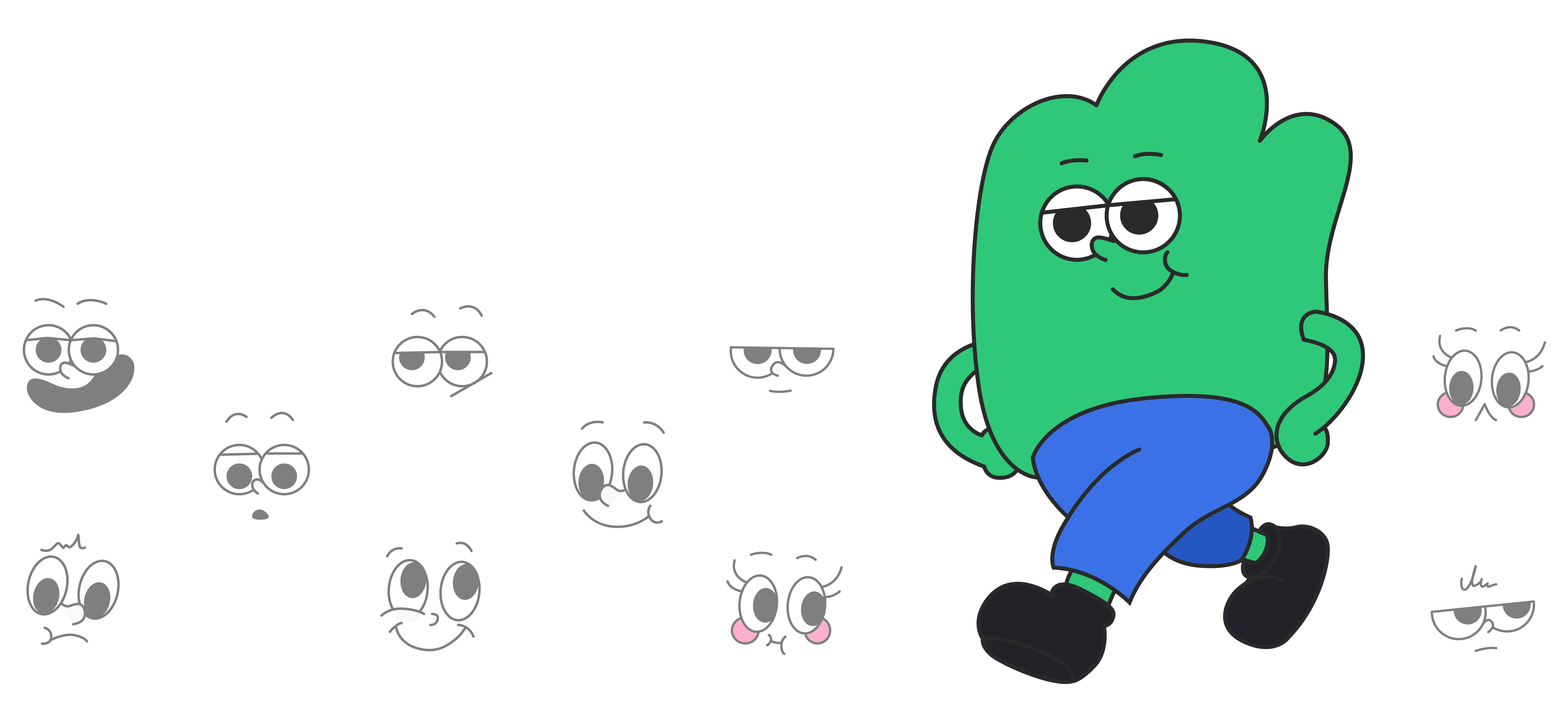
This direction balanced efficiency and expression
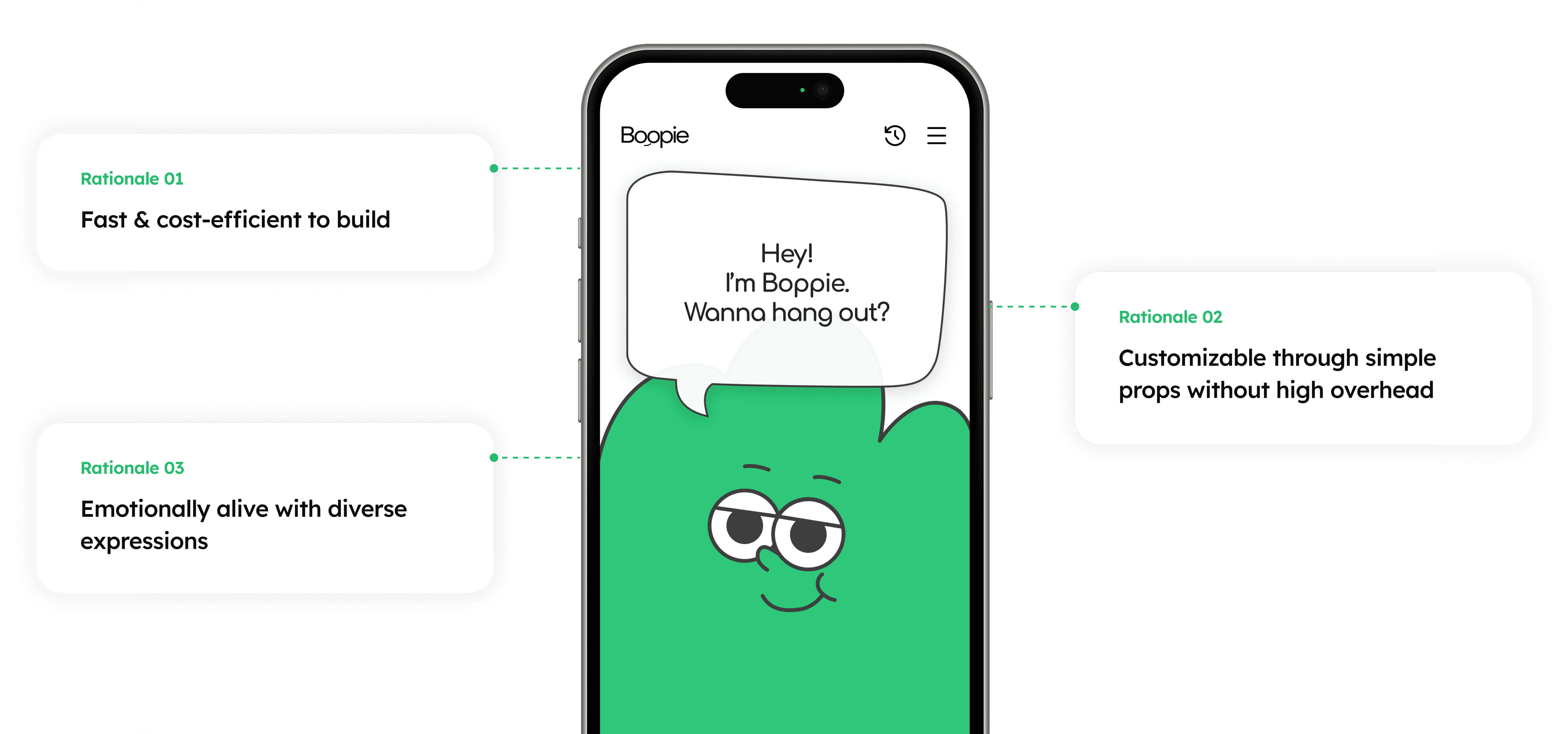
final design
A responsive character makes onboarding feel more seamless and inviting.
final design
Daily topic cards make starting a conversation feel effortless.
So… did it actually work?
Impact
Average session depth: 12 → 58 turns
Return rate: 2.1 → 4.7 visits/week
Impact
The tone of feedback completely changed.
In a pilot test with the mental health center and a public exhibition, we heard things like:
What I learned...